
Friday 20 May 2011 14.51 BST
- Article history
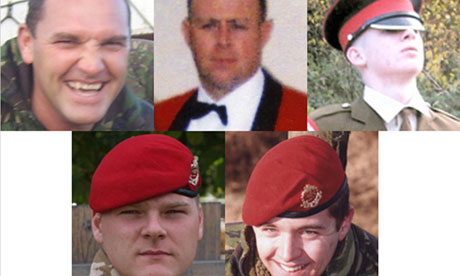
An extraordinary and disturbing picture of the Afghan police force that British soldiers were asked to work and live alongside emerged during the inquest into the deaths of five British soldiers at the hands of a rogue Afghan officer.
The Afghan national police officers were portrayed as open to corruption, unreliable, sometimes lazy and with a propensity to use drugs even while they were on duty. British soldiers said they simply did not trust the men they were mentoring.
Gulbuddin, the individual accused of shooting dead the five British soldiers, seemed particularly dubious. He smoked cannabis until he could not walk straight while on guard duty. He was once accused of attempting to sexually assault a British colleague, wrestling him to the ground and leaving him with scratch marks down his back. And on the day of the killing he went off in a "strop" after being told off for not wearing his police regulation hat.
Gulbuddin's motives remain unclear. The Taliban claimed "success" following the shooting, but nobody knows if he opened fire as an insurgent or because of personal animosity.
Despite it all, senior British officers gave an eloquent defence during the inquest of the policy of "mentoring" Afghan police and, though there have been more killings by rogue officers since, insisted the arrangement was helping to make Afghanistan a safer place today.
The policy of coalition troops becoming "embedded" with Afghan officers was brought in by the US general, Stanley McChrystal, who was the commander of US forces in Afghanistan at the time of the shooting, November 2009. His logic was that the only way of fighting an insurgency was to involve the local population.
Brigadier James Cowan, the commander of the 9,500 British soldiers in Helmand at that time, agreed. Whatever the risks of the policy, he believed the potential benefits outweighed it. Working with local officers meant the troops could "engage in conversation" with the people and allow them to win their confidence, Cowan told the inquest.
There was a second reason for wanting to use local officers. Bases at that time tended to be larger and more spread out. It allowed the Taliban to occupy the space in between more easily. The coalition wanted to increase the number of bases so that it could squeeze the enemy out. More troops were deployed but local officers were also needed to swell the numbers to staff all those new bases.
Yet another reason to use local men as police was that if they were working with British soldiers they were not - generally - fighting against them. It was why unreliable officers like Gulbuddin were not sacked. Deprived of wages and angry at being dismissed, they were likely to immediately join the Taliban and start shooting into the base they had just been defending.
The shooting of the five British soldiers by Gulbuddin had resulted in improvements, the inquest was told. It gave the coalition "leverage" to improve the vetting system for new recruits and led to compulsory drug testing for officers. The Helmand police training college opened a month later and began to churn out 600 better-trained officers every eight weeks.
Attacks by rogue officers continue. The US, Germany and Spain have all suffered losses at the hands of Afghan colleagues. Another inquest in Trowbridge in a few weeks time will hear how three members of the 1st Battalion The Royal Gurkha Rifles were shot dead by a rogue Afghan soldier.
During this inquest relatives of one of the five men killed asked Cowan if he had considered the risk to his men of implementing McChrystal's embedment policy. He said he had. He reeled off a long list of conflicts the British army had been involved in over more than three centuries and described how his own relatives and forefathers had been killed and injured in some of them.
War was "nasty" and it was a "ridiculous notion" to think that soldiers would not get killed. But he believed that Helmand was now a better place to live in - and a safer place for troops to operate in - in part because of the policy that had led to the deaths of the five men.

No comments:
Post a Comment